
What "Italian Gold" Actually Means When You Buy Wholesale
Half the wholesale gold market is sold as 'Italian.' Some of it actually is. The rest is a marketing word. Here is the working definition that matters when you are writing a PO.
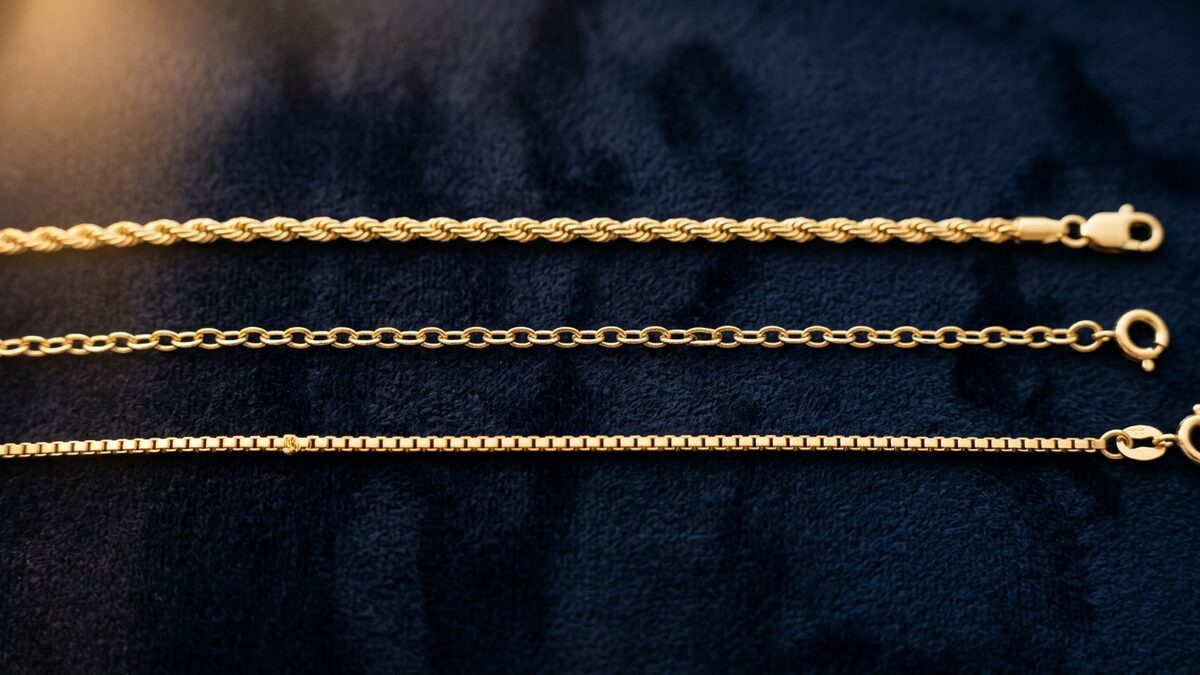
The 14K stamp is the floor, not the ceiling
Every chain stamped 14K Italy contains the same gold ratio — 58.5 percent fine gold, the rest alloy. That is not a quality marker. It is a content marker. What separates a chain that sells through from one that sits in your case is what happens around that stamp: how the chain is constructed, where it was actually finished, and which workshop ran the machines.
Real Italian production traces back to one of three regions: Vicenza, Arezzo, or Valenza. Vicenza is your high-volume chain capital. Arezzo is the budget end with broader machine fleets. Valenza is fine jewelry, not chain work. If your supplier says Italy without naming a region, that is your first signal to ask harder questions.
"Italian-style" vs. actually Italian
The trade has settled on a soft distinction that most retailers do not make at the counter. Italian, on a wholesale invoice, should mean the chain was machined and finished in Italy on Italian equipment. Italian-style means the design originated there but the chain was made elsewhere — usually Turkey, India, or domestic — using comparable equipment and similar finishing.
Both can be excellent. Both can be junk. The label by itself tells you nothing about quality. What it tells you is how aggressively to push on the country-of-origin language in your own marketing — and whether the price you are paying matches the actual provenance.
Three checks that separate the real from the marketed
The fastest tells, in order:
- The clasp. Real Italian production almost always uses a lobster claw with a stamped origin mark or an Italian maker's mark on the clasp itself. Imported chains marketed as Italian-style usually have generic clasps with no stamping beyond 14K.
- The link finish. Pull a 5-power loupe and look at the seam where each link closes. Italian machines leave a cleaner, more uniform seam — almost invisible. Cheaper imports show a more visible seam line and slightly inconsistent link spacing along the chain.
- The drape. Lay the chain flat on a black pad. Italian-finished chains lie smoother and roll more evenly when pushed. This is mostly down to polishing time and final tumbling — steps that are routinely shortened in lower-cost production.
Why this matters at wholesale
Your retail customer does not know any of this. Your job is to know it for them. The price difference between actual Italian and Italian-style at 14K, like-for-like by weight, is usually 12 to 22 percent. If you are paying that premium, you should be able to justify it on the bench in 60 seconds — clasp, seam, drape — and your retail customer should be able to feel the difference even if they cannot articulate why.
If the supplier cannot back the Italian claim with the three checks above, you are paying a premium for a word. That is fine if you are passing the word through to your customer with the same vagueness. It is not fine if you are pricing as if the provenance is the real thing.
How to write the spec on a wholesale order
Stop ordering "Italian 14K" as a category. Order by what actually varies: weight in grams, length in inches, gauge or wire diameter for chains, link style by name, clasp type and origin stamp, and country of last finishing. The supplier who can answer all of those without hedging is the one whose Italian claim is real. The supplier who cannot is selling you a story.
The 2026 wholesale gold reality
Spot has been north of $4,000 an ounce for most of this year. Margins on chain by the gram have compressed across every tier. The retailers who are still moving inventory are doing it on stories that hold up — provenance, finishing, the clasp stamp. The ones with thin claims are the ones returning unsold pieces six months later. Italian-as-marketing is one of those thin claims. Italian-as-spec is not.
What to ask your supplier this week
One question, on email, before you place the next order: "For the chains marked Italian on my last invoice, can you confirm the workshop region and provide the maker's mark on the clasp?" The answer you get will tell you most of what you need to know about whether to keep this supplier on the rotation. If the answer is generic or evasive, you have a Italian-style supplier writing Italian on the invoice. Adjust your pricing — and your sell story — accordingly.